Grief comes in waves. Some of the waves are predictable, as in the oft-discussed “stages of grief” developed by Elisabeth Kübler-Ross. Sometimes, though, the grief comes in an unexpected monster wave that triggers irresistible sobbing, sorrow, and yearning for the loved one gone too soon.
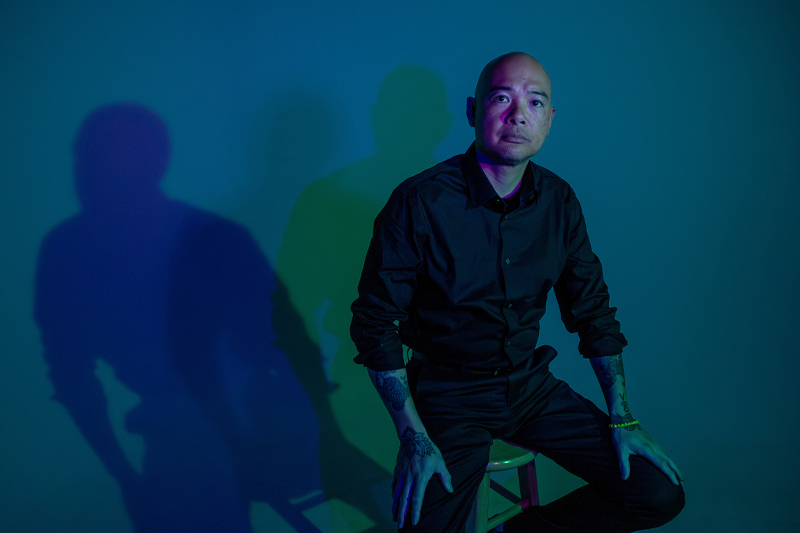
Psychology professor Dr. Sherman Lee calls that monster wave a grief attack. He has co-authored new research to help scientists and mental health professionals understand this mystery and treat it. His findings have been featured in the New York Times and shared across the country on With Good Reason, a nationally syndicated public radio program produced in Virginia.
“It feels like a panic attack, but worse, much worse,” Lee said. “You tremble, sweat, feel dizzy and then come sobs and deep feelings of sorrow and yearning. This can happen at any time, when you’re driving or folding the laundry, and it can shake you to your core.”
To find out what grief attacks are and how and why they take place, Lee and co-author Robert A. Neimeyer, the director of the Portland Institute for Loss and Transition in Oregon, analyzed survey responses from 247 bereaved adults.
Lee and Neimeyer discovered that grief attacks are made up of specific panic attack symptoms and acute grief symptoms that occur during one intense moment in time. Grief attacks can be triggered by a glance at a photo or hearing a song connected to a loved one, but more often they come seemingly out of nowhere with no internal warning. While survey responders’ experiences varied, the highest percentage reported their attacks lasted up to 15 minutes and most often happened when they were alone.
In general, younger adult mourners were more prone to intense grief attacks relative to older respondents, and women reported more acute yearning for the deceased than did men, Lee and Niemeyer concluded. These attacks carry risk beyond the emotional pain, especially if they take place while driving or at work.
So that therapists and other mental health professionals know how to respond, Lee and Niemeyer developed the Grief Attack Questionnaire (GAQ). Therapists can administer the questionnaire to their patients and then develop a specific treatment plan.
The GAQ and the findings from the surveys of bereaved adults were published in a November 2025 article in the peer-reviewed journal Death Studies.
“Grief attacks may never go away completely but they can be managed,” Lee said. “The key is to understand them as they happen, seek care with a knowledgeable professional, and then begin to heal.”
The research on grief attacks is an outgrowth of Lee’s influential work in related topics. He has explored the psychological impact of the covid pandemic and developed a screening tool for covid anxiety. Psychology professor Dr. Tim Pressley used that tool to assess pandemic-related anxiety among school teachers.
Lee and Pressley were among four CNU teacher-scholars included in a list of the world’s most influential scholars and scientists in an annual ranking compiled by Stanford University and the analytics firm Elsevier.