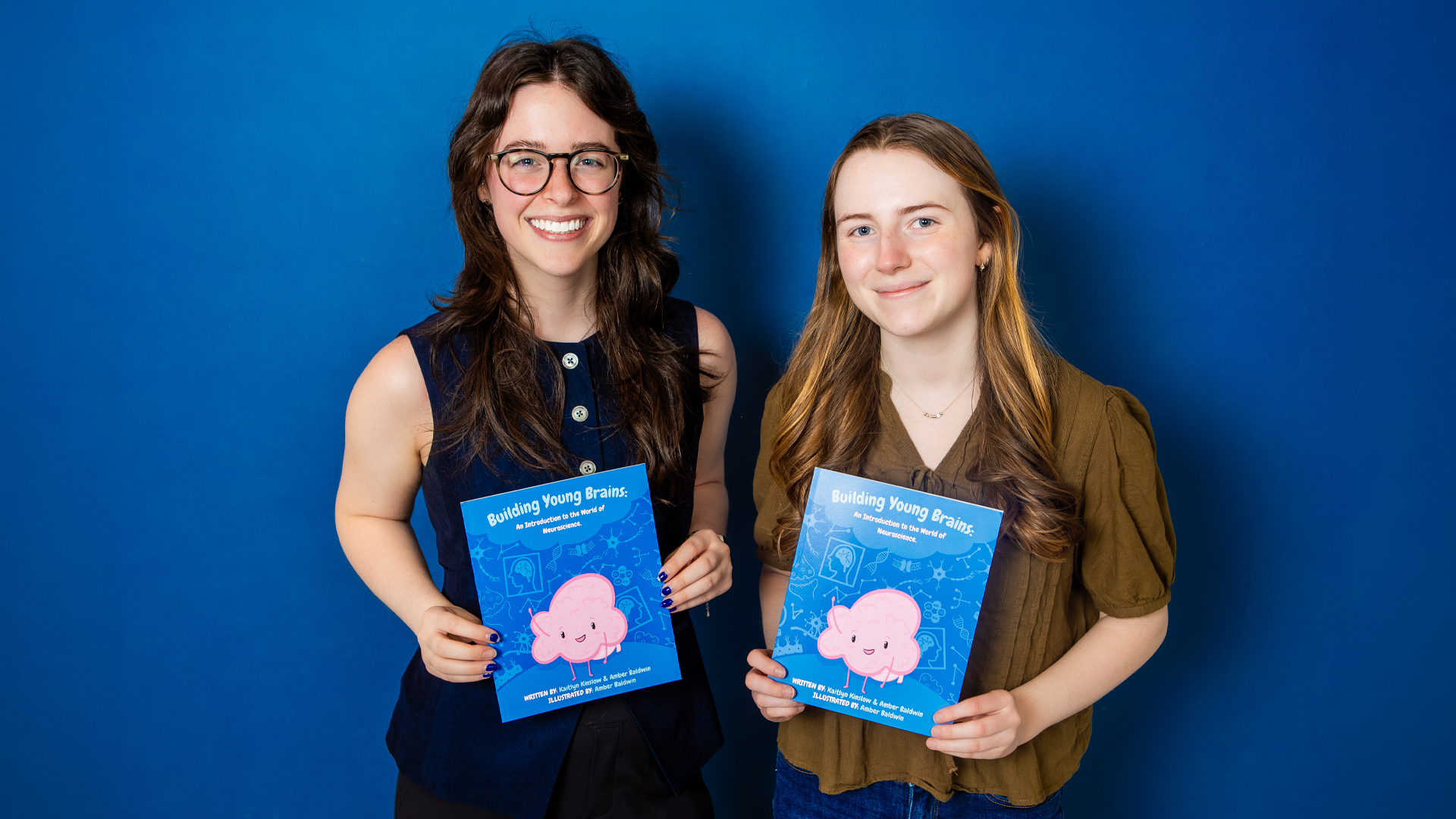
Kaitlyn Kinslow and Amber Baldwin are fascinated by the way the human brain works.
Now recent graduates, they spent their years at CNU learning, studying, and researching neuroscience. They love it so much that they decided to share what they know - not with fellow Captains, but with elementary school students. The duo wrote a book titled “Building Young Brains: An Introduction to the World of Neuroscience."
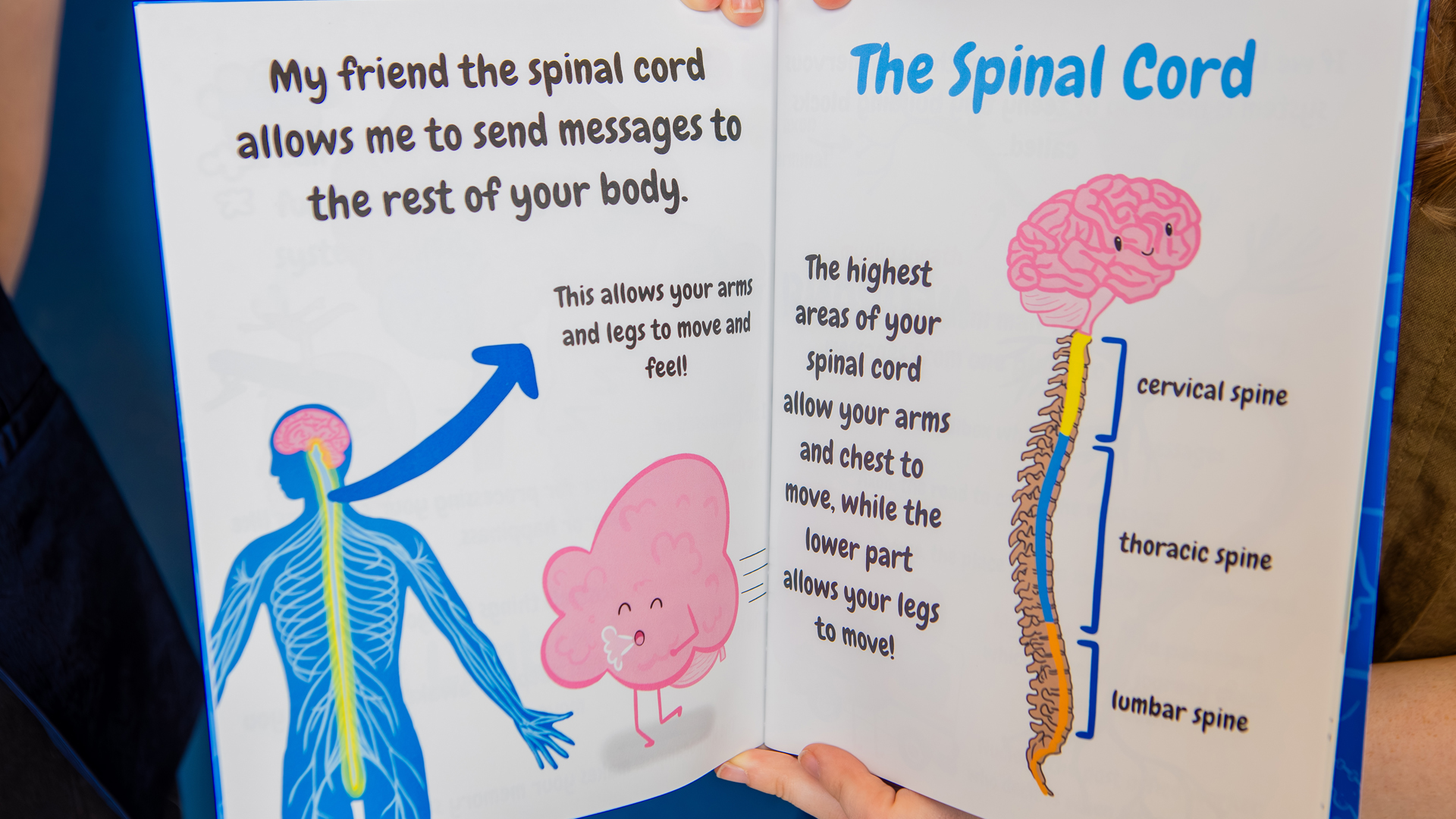
The book, illustrated by Baldwin and written by both of them, is a colorful, insightful look at the brain and all of the roles it plays and its pieces and systems that make it work. The book was intentionally designed to bring neuroscience to life in a way that young minds could understand.
Kinslow and Baldwin, both ‘26 neuroscience majors, worked to create something that would bring knowledge to young people in an artistic, colorful, and joyful way.
“We wanted to give back and increase awareness,” Kinslow said. “We thought this would be a fun way to make that happen.”
As the students looked into writing a book, they realized there was no mention of neuroscience or the brain in much of Virginia’s K-12 curriculum. It was a void they knew they could fill.
Knowing that CNU offered many ways to expand the reach of student research, Kinslow and Baldwin proposed the book and received funding to make it happen through the Honors Program and the Office of Research and Creative Activity (ORCA). From there, it was fast forward.
“It was a very collaborative process. We went back and forth with a lot of ideas,” Kinslow said.
For years, whenever Baldwin doodled at home or in class, she would draw a fun image of a brain that came to life with eyes and a mouth. It didn’t take long for her to decide that would be the perfect main character of the book.
They wrote the book as simply, yet accurately and engaging as possible, pouring their knowledge and excitement for the subject into its pages. They covered all of the foundational concepts of neuroscience, but in a simple, easy to understand way. The book also explains what a neuroscientist does and what kind of careers are available in the field.
“We have tried to give kids a baseline of neuroscience,” Baldwin said. “ It is one of the projects I'm most proud of in my time at CNU.”
Kinslow and Baldwin, who have each done extensive research in labs on campus and off, are not only passionate about neuroscience, but also possess an artistic flair. The book provided an opportunity to showcase that.
“Neither of us fit the stereotype of a scientist. We wanted to show there is a fun and creative side of science,” Baldwin said.
The book has received rave reviews, not only from people in the field, but also from children who have read it and from Baldwin’s grandmother, who now considers herself well educated in neuroscience based on what she learned from the book.
“She flaunts her knowledge to friends,” Baldwin said. “She is so proud that she knows it.”
Kinslow’s mother is a teacher and takes great pride in the fact that her daughter is working to educate youngsters.
“She is super excited about it,” Kinslow said. “She keeps sharing it.”
Both Kinslow and Baldwin plan to pursue their doctorate degrees in neuroscience after graduation, Kinslow at Medical College of Wisconsin and Baldwin at Medical University of South Carolina.
Even though they are graduating and moving on, Kinslow and Baldwin are hopeful that their book will continue to make an impact and open pathways for young students who are enthralled by science.
“We want this book to make a difference,” Baldwin said.