The Christopher Newport campus is known for its award-winning residence halls, stunning campus amenities, and chef-inspired dining hall meals. This isn’t just surviving - it’s the good life.
But what would happen if Captains suddenly found themselves in a situation off campus where they had to fend for themselves in perilous circumstances that required survival mode?
No worries. CNU has a class for that. Really.
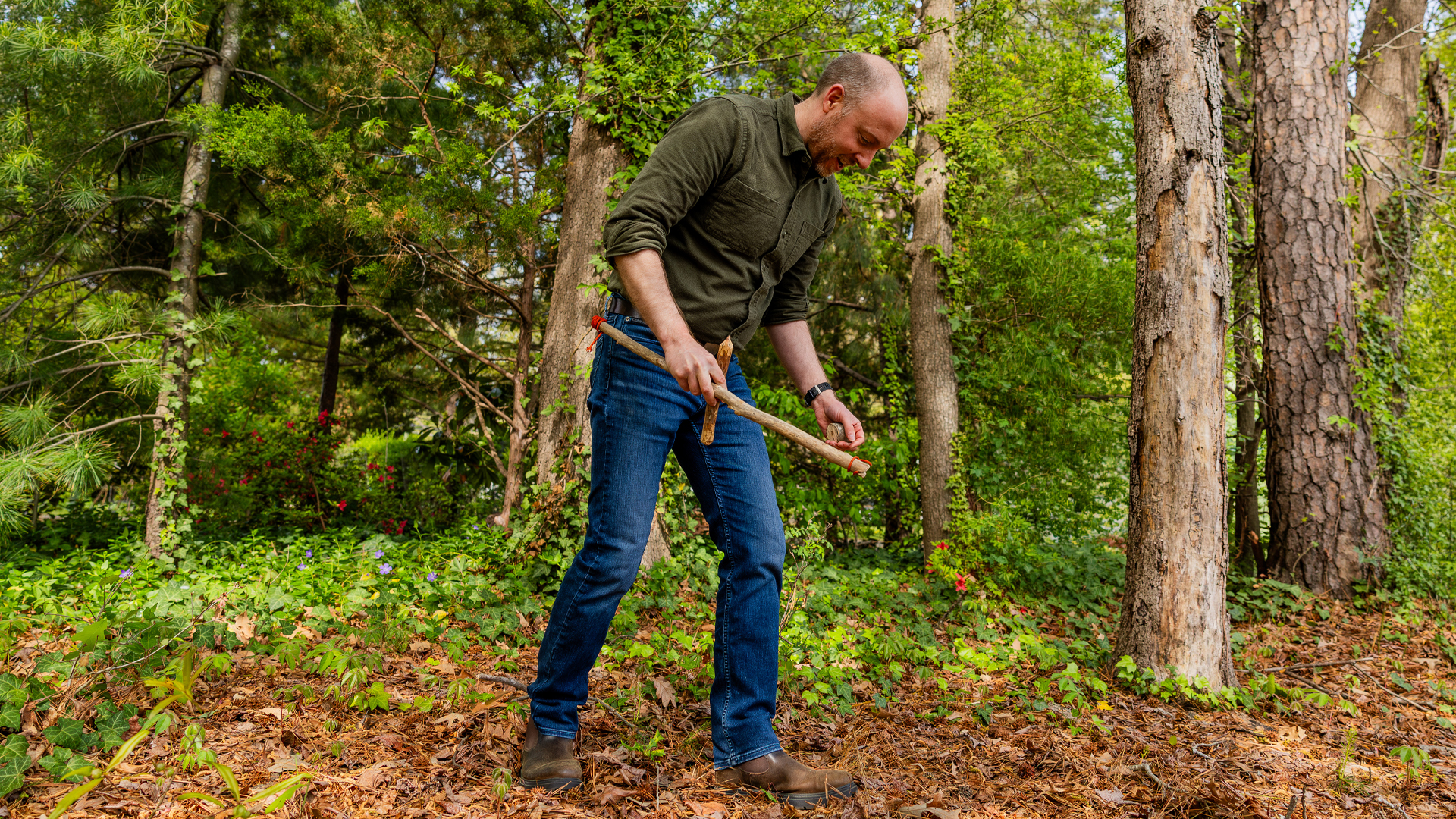
Chemistry of Survival, CHEM 110 teaches students to engage chemistry when in need of emergency food, water, shelter, and fire. Students learn how to survive if they suddenly find themselves in unexpected predicaments.
For example, students in the class examine the composition of water and what is required to engineer clean drinking water. Students learn to fashion apparatuses that clean and distribute clean water using very few objects. They also are schooled on the science of fire and the dynamics of building with non-traditional materials.
In terms of food, the class educates Captains about calories and nutrition and what is needed of both to stay alive. For example, can people sustain themselves by eating acorns or worms? Turns out, the answer is yes.
Dr. Josh Patterson, professor of chemistry, came up with the concept based on the premise that it is a win-win for students and the study of science. He designed the class to incorporate chemistry to help students figure out ways to survive in tough circumstances. It is dubbed as a class that “could save your life.”
Chemistry is infused in the way of fire, food, shelter, and water. The class moves the study of chemistry out of the realm of the classroom and into the real world.
“I really wanted to create a course in which I could show the use of chemistry to solve problems,” Patterson said.
The class’s final project involves the concept being stranded in a designated place, such as a national park. Groups are assigned specific environments and accessible materials and resources. They must then craft a survival plan targeted to that area.
“Every place is different. It’s different to be stranded in Texas in the summer as opposed to Alaska in the winter.
“They all have to use different strategies and tools,” Patterson said. “It’s fun to see what they plan to do with them. “A lot of survival is coming up with and executing a plan, much like in science. As a chemistry professor, I obviously really like science. It’s neat to share its applications and change students' minds about science. It’s great to see them get excited about it.”
The class is designed for nonscience majors and fulfills the credit requirements in the Investigating the Natural World area of inquiry (AINW).