Summer is the season when mosquitoes come out in force.
It is also the time Christopher Newport students ramp up their research. Combining the two makes for a perfect project for students who itch to use research to make a difference.
A group of Captains spent the summer fine-tuning an interactive website called Mosquito Watch that identifies disease-carrying mosquitoes in Norfolk and uses a geographic information system (GIS) to map where the highest concentrations of these pesky insects are located.
The user-friendly online platform educates the public and warns people about parts of the city that are home to high numbers of mosquitoes.
The students, all computer science majors, took on the project as a Summer Scholars initiative, which allows them to live on campus and get paid to do the research over the summer.
Research is a priority on campus, as it is one of the four pillars of a CNU education.
The mosquito project proved to be an ideal way to merge solving a public health problem with elevating research experience.
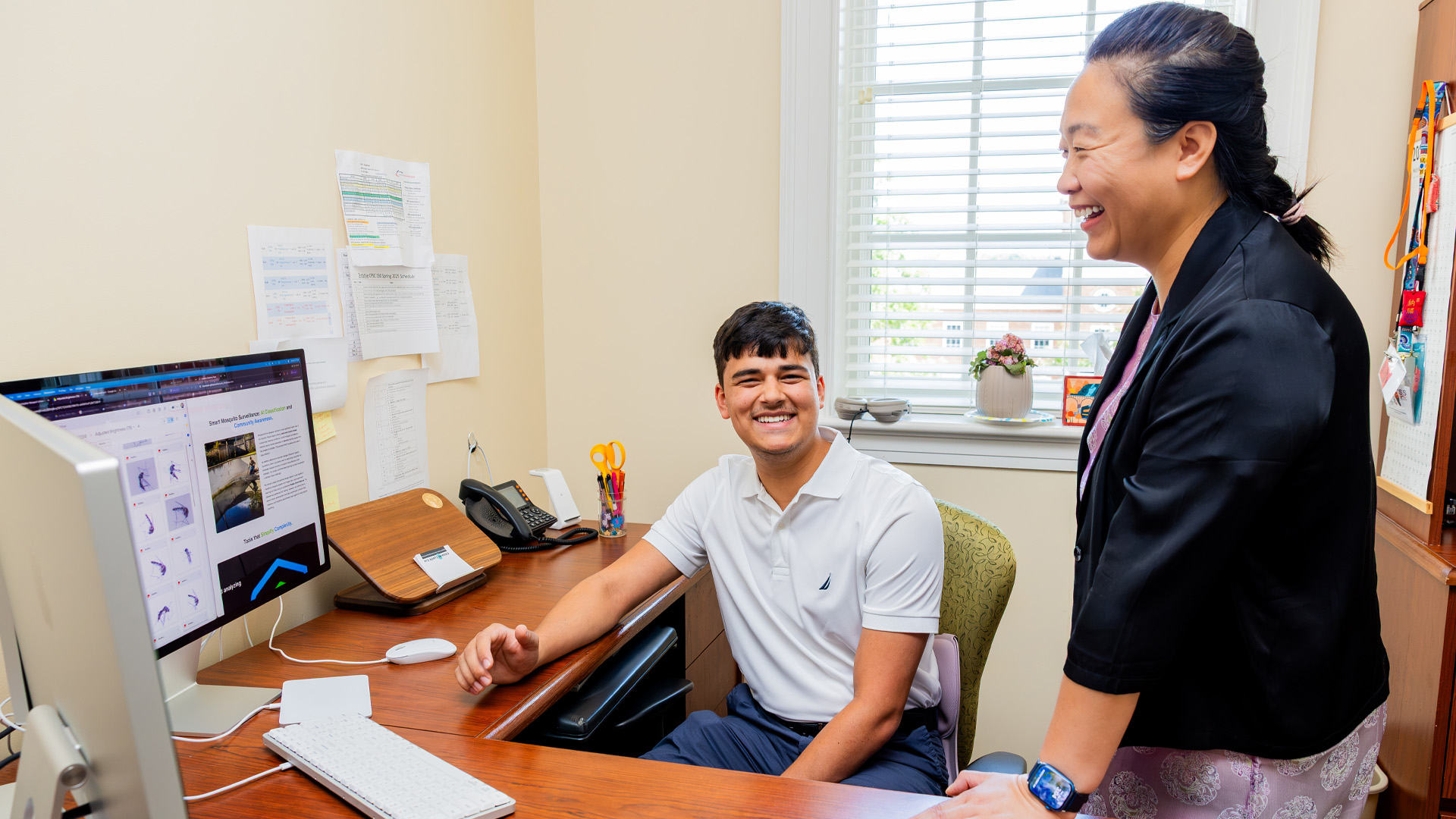
“Students gain much more than technical skills. They learn how to take an open-ended real-world problem, understand the data, develop and evaluate artificial intelligence (AI) models, troubleshoot problems, interpret results, and communicate their findings,” said Dr. Yan Lu, an assistant professor in the School of Engineering and Computing who worked with the mosquito team. “They begin to understand that research is not about funding one correct answer - it is about asking good questions, testing ideas, learning from results, and continuously improving the solution.”
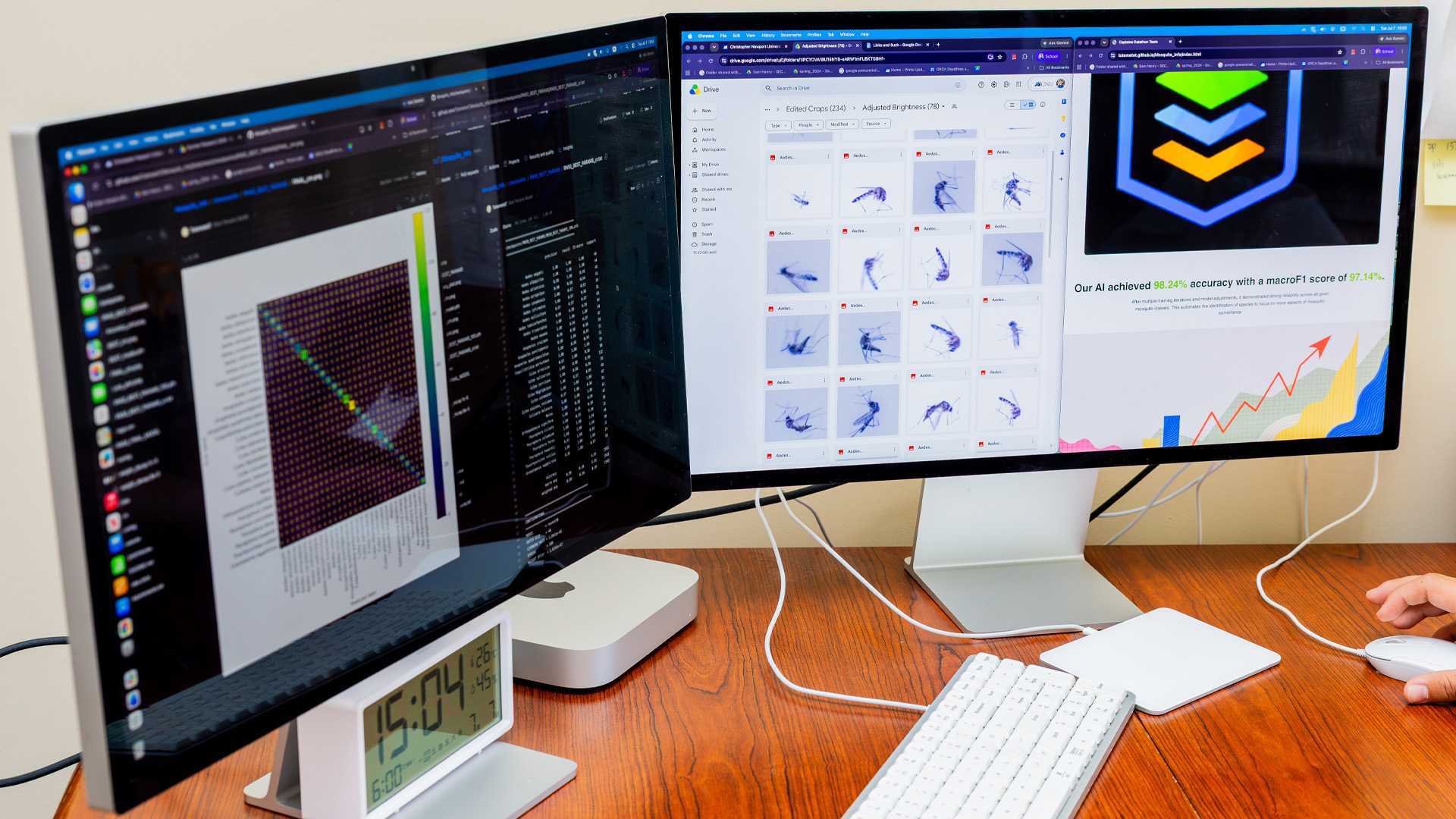
The students used agentic AI to gather a base of data that identifies and classifies the various mosquito species. Agentic AI is a system that acts like an autonomous employee who delivers a complete outcome instead of responding solely to a single prompt.
The ultimate goal: for Norfolk residents to be able to use the website to upload an image of a mosquito and then have the model identify the species and where it is most likely to be found in the city. The database will also specify which species carry West Nile virus, Zika, and other mosquito-borne diseases.
“This will help keep people informed about the mosquito population; which mosquitoes carry dieseases and which are harmless. Also, with the GIS map, it will show the public where there is a high concentration of dangerous mosquitoes and where Norfolk needs to focus their efforts on mosquito population control,” said Emma Redash, ‘28 Computer Science.
The project is a continuation of research that started last year and drew attention when it earned second place in the Hampton Roads Datathon, an annual regional competition that brings together university students, academic researchers, non profits, city departments, and industry partners to tackle community challenges through data science.
The Summer Scholars set out to further the research and, in turn, fine tune the website to make it more comprehensive.
“We saw that the project had much potential beyond the competition.” Lu said. “I definitely see opportunities for this work to continue. Ultimately, we hope that the research can move from a student research project toward a tool that provides practical value to the community. We have already seen very promising results from our improved deep-learning models, and the next step is to make the system more robust and usable with real-world data.”
Not only will the Captains’ efforts enhance the database, it also gives them experience with using the cutting-edge agentic AI application, a tool that can be applied to a wide range of projects in many different career fields. The students were tasked with training AI to help bolster data on species of mosquitoes.
“This research is important as it allows for easier classification of the mosquito species found in the City of Norfolk, specifically for finding those that contain the West Nile Virus,” said Ryan Schatzberg ‘27 Computer Science and Cybersecurity. “The general population will be able to use our website to upload an image of a mosquito and have the model identify the species along with the locations that they are most likely to be found. As for the scientific community, they will benefit by not having to manually identify mosquito species from the traps located in the city of Norfolk.”
The project provided the Captains a way to build their skills and experience, and hopefully strengthen their resumes. The mosquito project, they said, both assists the community in real time while helping them see different possibilities in terms of their career paths.
“This experience has provided me with the opportunity to feel confident in my career choices. I always knew I wanted to do the behind-the-scenes and not outward facing work (i.e. user interfaces). This summer I had the opportunity to fix problems in my code, which was incredibly rewarding and fun, something I really didn’t think I would have in anything job related. It reinforced that I picked the right major and gave me the confidence knowing I can and will enjoy my selected field, which feels great,” Redash said.