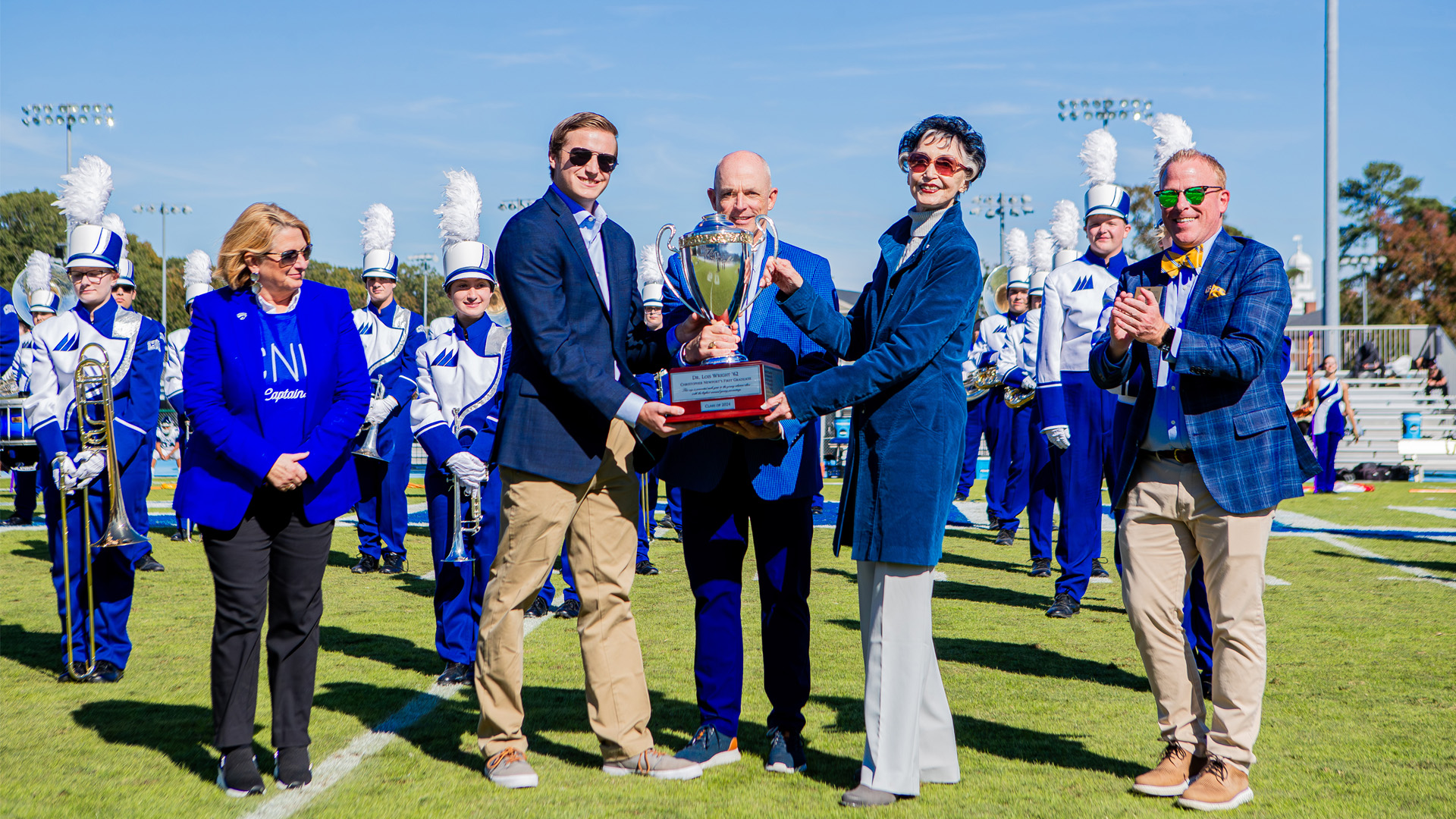
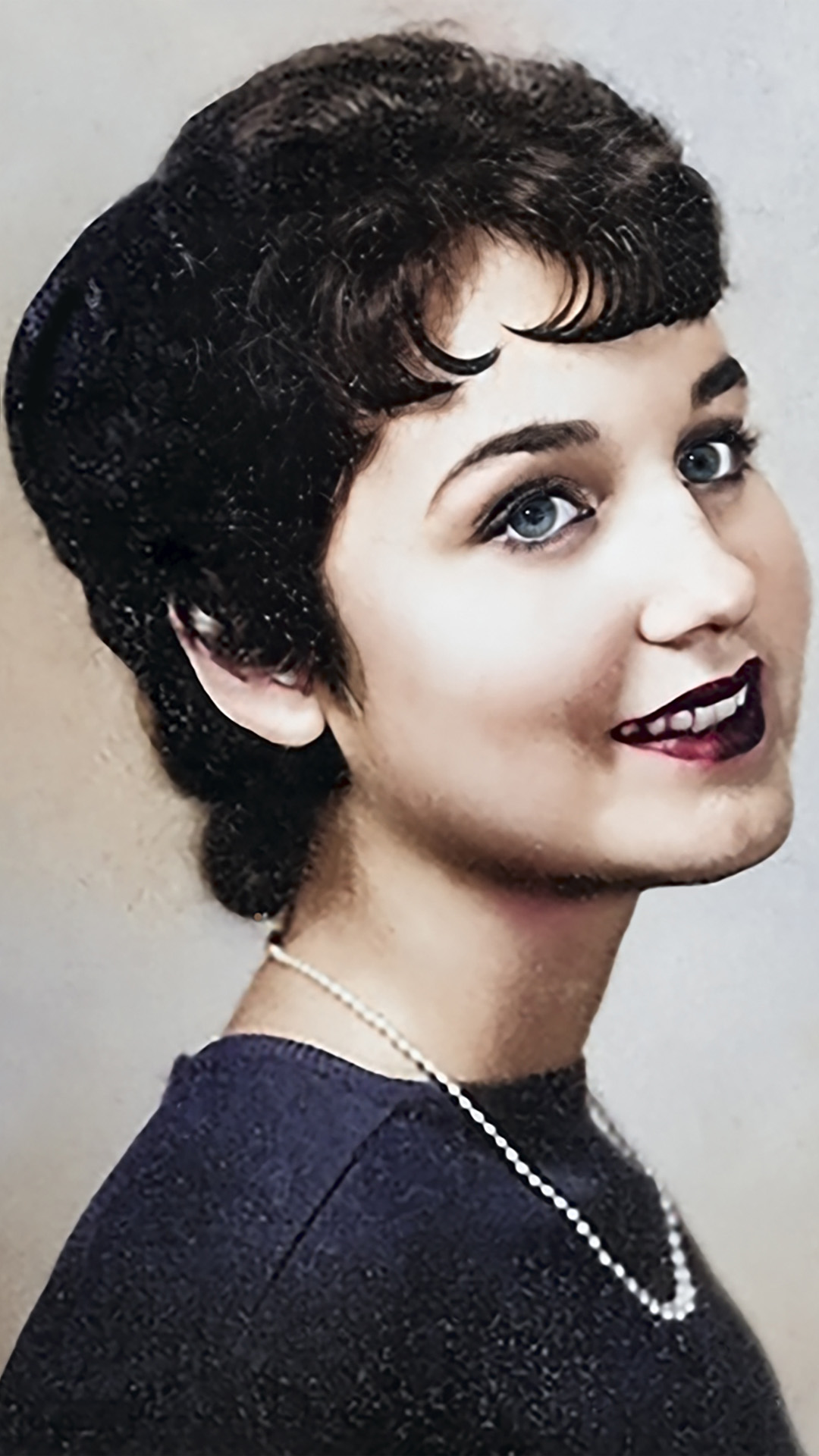
Before there were many graduates, there was just one: Lois Wright
1962 was a year of firsts. The Beatles released their first album. John Glenn became the first American to orbit the Earth. Johnny Carson began his iconic run as host of The Tonight Show.
But for future generations of Captains, there was another milestone–this one much closer to home–when Christopher Newport College awarded its first degree to its very first graduate. It was a defining moment in the college’s humble beginning.
At the time, CNC was housed in a repurposed elementary school in downtown Newport News. There were only eight full-time faculty members and about 170 students. Among them: a bright young transfer named Lois Wright, who that spring would become Christopher Newport’s first, and only, graduate.
Wright was the Class of ‘62. The entire Class of ‘62.
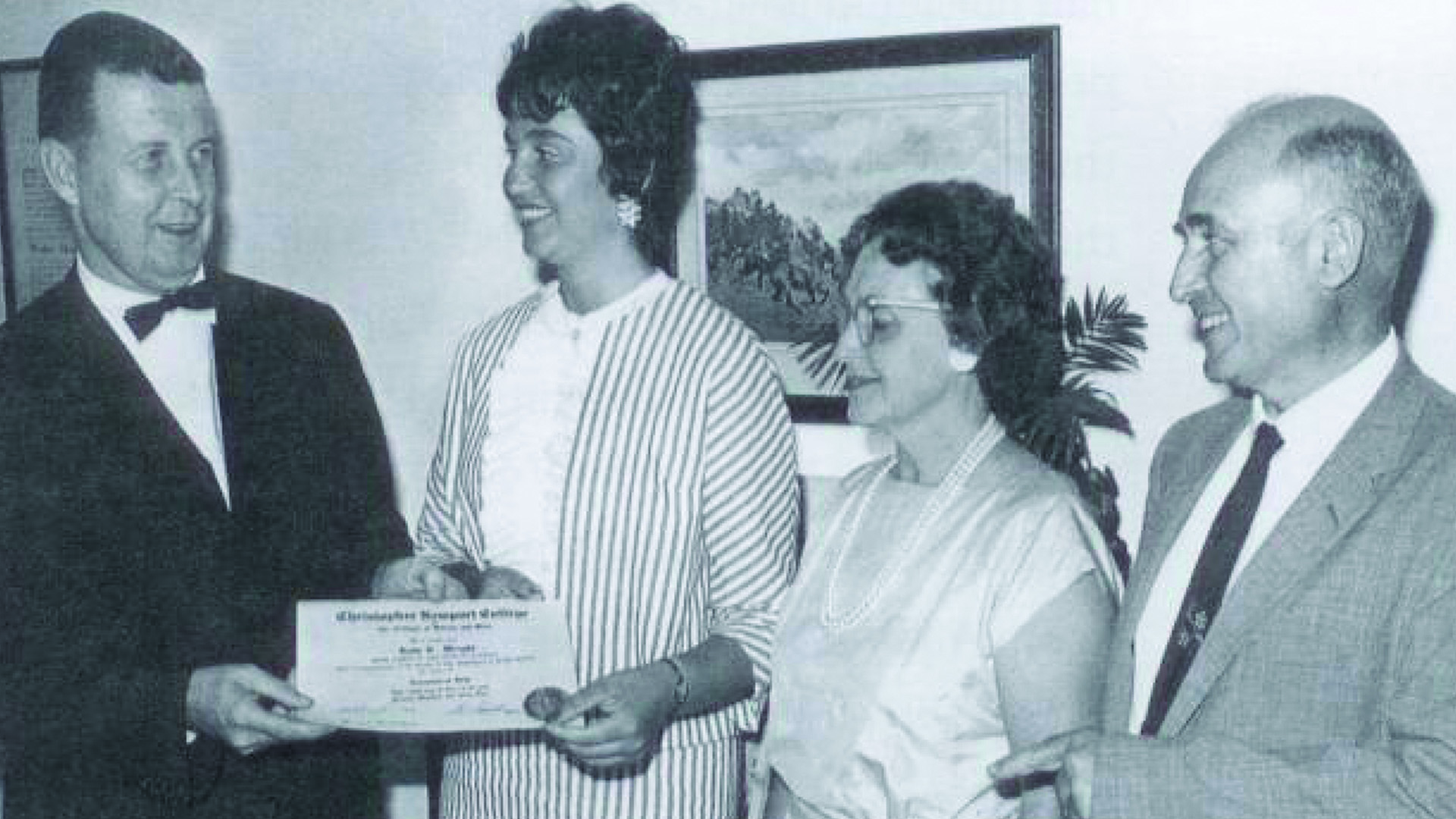
“I was called into the office of H. Wescott Cunningham, Director of CNC, and learned I was the only student with sufficient credits to have earned the Associate in Arts degree,” Wright recalled. “With my parents present, Cunningham conferred the degree. Though it was an exciting and unexpected experience, I had no way then to anticipate what it would later mean to me to have been the first graduate of what became CNU!”
Wright treasures her unique, if serendipitous, role in the history of Christopher Newport. Following graduation, she enrolled at William & Mary to pursue her passion for writing and literature, earning a Bachelor of Arts in English. But Wright’s future shifted when she decided to move to Greensboro, North Carolina, and accepted a social work position.
“I hadn’t planned to go into social work, but I had to be practical,” Wright recalls, “‘Reading poetry did not appear in any job ads! So, opportunistically, I became a social worker. And it’s a path I don’t regret. Though my background in English is still very important to me (poetry sings in my head daily), what I learned in my social work jobs proved invaluable. Those many face-to-face conversions I had with the poor, disadvantaged, and marginalized citizens permanently changed how I view all people. Their humanity shone through, regardless of economic, social, or health status.”
The experience helped shape not only her worldview but also her life’s work. After earning a master’s degree in social work from Richmond Professional Institute, which later became Virginia Commonwealth University, and her doctorate in education from William & Mary, Wright went on to spend the majority of her career at The College of Social Work at the University of South Carolina (USC), teaching graduate courses in social work and eventually being appointed to the position of assistant dean. She also founded and directed The Center for Child and Family Studies (CCFS), a research and training unit for family dysfunction–child abuse and neglect, spouse abuse, elder abuse, incarcerated women–as well as substitute care and adoptions.
“I consider my greatest professional achievement to have been nothing that I produced directly –not my research or articles or teaching –but creating at CCFS a workspace that enabled employees to do far better work than I could have done alone,” she said, adding, “The CCFS continues today, under new and very capable leadership.”
Looking back on her time at CNC, Wright recalls a small but connected community. There was no David Student Union or sprawling Great Lawn where fellow students could hang out, but Wright recalls there was a space in the original college building dedicated to students eating lunch together and socializing between classes.
“That’s where we gathered to get to know one another as well as to discuss our classes and professors. We did have this common experience, being part of something new,” she said. “This was exciting and gave us a sense of belonging. I can’t say we were lonely or disconnected, but we didn’t have the immersive experience that residential colleges provide. We were all commuting students. There were no resident halls, clubs, Greek life, or athletics. Many students were working and splitting their time among college, work, and family life.”
Like generations of Captains after her, Wright credits Christopher Newport’s faculty with shaping her experience at CNC and helping to create some of her most enduring memories.
“Everyone who was fortunate enough to have taken English classes with Mr. Barry Wood knew him as always the entertainer. Who doesn’t remember his Chaucerian characterizations and antics (including jumping out of the window)?! I’ll always remember Mr. Faye Green, who taught me that the inclusion of rich detail could add depth and meaning to an otherwise pedestrian piece of writing,” she said.
Although Wright is reluctant to offer insight or wisdom. “I’m not sure current or future Captains want or need advice from me. They seem quite savvy, much more so than I was their age.”
However, she does tout the importance of humility.
“But there is an important paradox here. In the larger scheme of things, we are all fairly insignificant, tiny creatures afloat in the unfathomable universe(s). Yet, we are also infinitely significant! Every breath we breathe, every word we say, every act we perform, has significance far beyond anything we can imagine. What does that mean for us? Maybe it means not getting caught in delusions of grandeur or blind ambition, yet knowing that everything we are and do can have important consequences–for better or for worse. Consciously choose the better,” she said.
Today, Wright remains deeply connected to CNU, both as an engaged alumna and as a supporter of the University's mission. Wright has also created a scholarship for a music major with a focus on classical music and demonstrated financial need. She has made a gift and will also support the scholarship through her will.
“When I was at CNC, the concept of Captain for Life had not yet been born. It was only after retiring from The University of South Carolina and returning to Williamsburg that I learned about it and about the CNU values--honor, scholarship, service, leadership, leading lives of significance, and commitment to community. As I became increasingly involved with CNU, I observed that these values weren’t just written; they were lived. Everyone talked about the values and was proud of them, feeling them bone-deep. I don’t believe I have ever attended a function at CNU at which values weren’t referenced. They are part of people’s lives. This is extraordinary. So, now I am hooked, attending every event I can at CNU and supporting it financially.”
Now, sixty-five years after receiving her diploma in the briefest of ceremonies, Wright's unique role in Christopher Newport history takes on a deeper meaning, helping to write the first chapter of an institutional story that continues to evolve decade by decade, graduate by graduate.
“Being a Captain for Life,” Wright said, “Is a privilege and a great pleasure.”